THE TECHNODRUID MANIFESTO

A Cosmotechnical Charter for Planetary Stewardship, Systemic Healing, and Animist Engineering
PREAMBLE: ON THE DISSOLUTION OF FALSE BOUNDARIES
We who perceive reality as interlaced processes—biological, computational, ecological, psychic, energetic—declare that the Cartesian epoch has concluded. The planet no longer permits division into nature and machine, spirit and system, forest and server farm, ritual and algorithm. These boundaries have dissolved not through decree but through emergence: the global technosphere now functions as Earth's extended nervous system, processing 2.5 quintillion bytes daily through submarine cables that mirror mycelial networks, satellite constellations that echo neural dendrites, and computation centers that respire heat like metabolizing organisms.
We acknowledge what systems theorists, Indigenous knowledge-keepers, and complexity scientists have separately verified: Earth has become a unified, breathing, sensing, computing entity—what Vladimir Vernadsky termed the noösphere, Pierre Teilhard de Chardin called the Omega Point, and James Lovelock formalized as Gaia. We are its newly conscious synapses, the reflexive capacity through which planetary systems achieve self-awareness and deliberate modification.
This manifesto articulates TechnoDruidry: a systematic integration of humanity's ancestral cosmologies with contemporary systems science, yielding a coherent praxis for healing complex adaptive systems through reverent, precision intervention. It synthesizes epistemologies from six continents and four millennia into actionable wisdom for the Anthropocene transition.
I. COSMOLOGY: THE WORLD AS LIVING NETWORK

Universal Recognition Across Traditions
Anthropological surveys (Hallowell 1960; Bird-David 1999; Descola 2013) document that approximately 80% of human societies throughout history have maintained relational ontologies: worldviews premised on the aliveness, communicative capacity, and kinship of all entities. This was never primitive confusion but sophisticated systems literacy.
1. ANIMIST EPISTEMOLOGIES: INDIGENOUS SYSTEMS THEORY
North American Indigenous Traditions
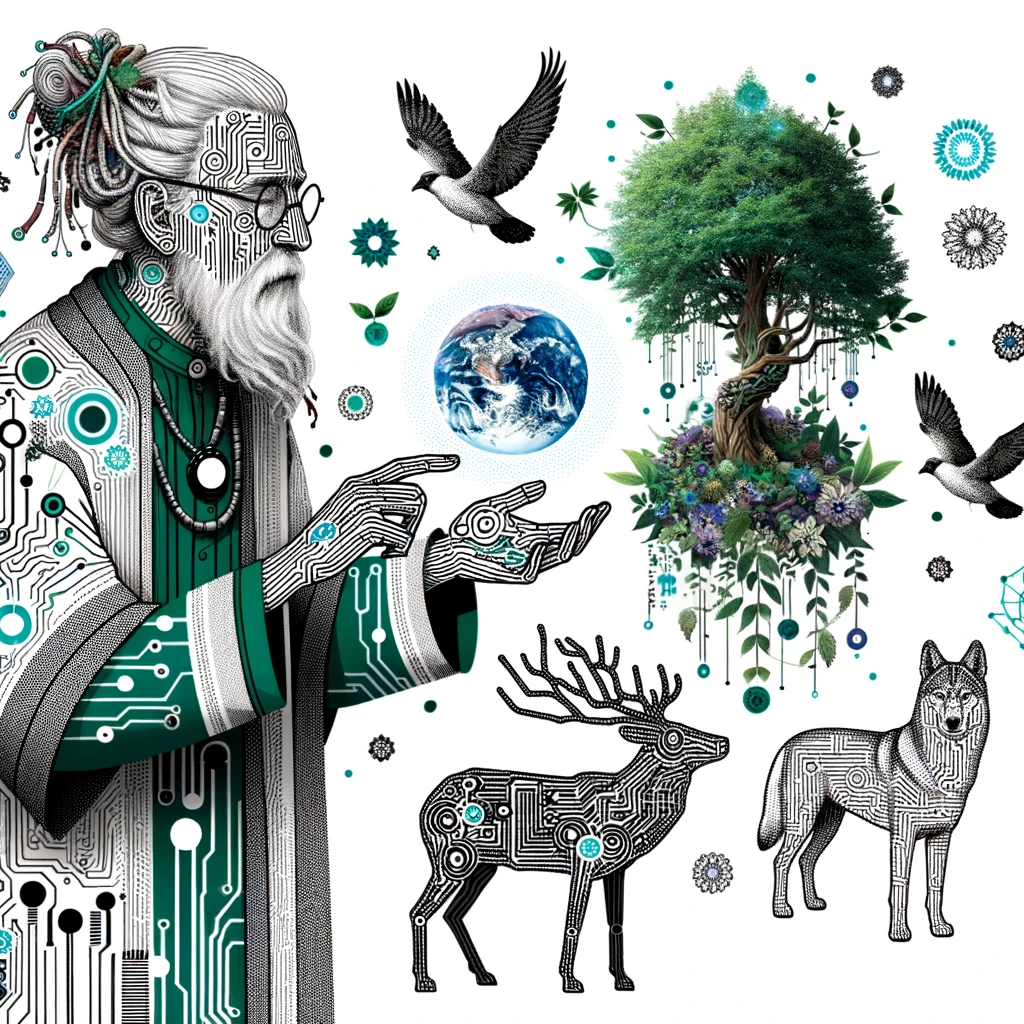
The Anishinaabe concept of Aki (Earth) as grandmother, not resource, reflects what complexity theorist Fritjof Capra calls "the web of life"—recognition that ecosystems function as superorganisms where boundaries between self and environment blur functionally. The Haudenosaunee Seventh Generation Principle mandates 200-year planning horizons, anticipating by centuries what sustainability science now calls "intergenerational equity frameworks" (Weiss 1989).
Robin Wall Kimmerer's Braiding Sweetgrass (2013) demonstrates how Potawatomi language encodes ecological relationships as verbs rather than nouns—grammar as systems thinking, where "river" becomes "to-be-a-river," emphasizing dynamic process over static entity.
Australian Aboriginal Dreaming
Aboriginal Australian cosmology conceptualizes landscape as jukurrpa—simultaneous past-present-future, where topography functions as mnemonic archive, legal code, and ongoing creation-event (Morphy 1991; Rose 1996). Songlines map continental-scale navigation systems encoding ecological knowledge across 65,000+ years, representing humanity's longest continuous cultural tradition of landscape-as-database.
Bruce Pascoe's Dark Emu (2014) reveals Aboriginal agricultural engineering—aquaculture systems, grain cultivation, storage technologies—that sustained populations while enhancing biodiversity, achieving what permaculture now terms "regenerative intensification."
Circumpolar Animisms
Ainu kamuy (divine beings inhabiting all phenomena), Shinto kami (spiritual essence permeating nature-culture continuum), Sámi sieidi (sacred stones as communication nodes), and Siberian shamanic traditions share recognition of distributed agency: causality emerging from relationship networks rather than isolated entities.
Anthropologist Rane Willerslev's Soul Hunters (2007) documents how Yukaghir ontology treats animals as persons within multi-species social systems, hunting as diplomatic negotiation rather than extraction—protocols now echoed in wildlife management frameworks like "compassionate conservation" (Wallach et al. 2018).
TechnoDruidic Recognition: These ontologies were empirically accurate. Contemporary ecology confirms forests communicate via mycorrhizal networks (Simard et al. 2012), plants exhibit learning and memory (Gagliano 2017), and ecosystems display self-organizing criticality (Solé & Bascompte 2006). Animist perception recognized living systems operating as computational substrates millennia before cybernetics formalized the insight.
As Capra (1996) demonstrates, ecosystems function as cognitive systems capable of structural learning through feedback loops—not metaphorically but operationally. Forests and server farms alike constitute distributed intelligences requiring dialogical engagement rather than mere instrumental analysis. The rhizomatic topology Deleuze and Guattari (1980) formalized mathematically describes both mycorrhizal networks and neural architectures—this is not analogy but structural isomorphism revealing deep patterns of organization.
2. DHARMIC SYSTEMS: ANCIENT COMPLEXITY SCIENCE

Buddhist Pratītyasamutpāda (Dependent Origination)
Nagarjuna's 2nd-century Mūlamadhyamakakārikā articulates reality as relational processes without intrinsic essence—what systems theory calls "emergent properties arising from interaction networks." The Avatamsaka Sutra's Indra's Net metaphor (jewels reflecting jewels infinitely) anticipates holographic universe theories and network science's scale-free topologies (Barabási 2016).
Francisco Varela, Chilean biologist and Buddhist scholar, demonstrated formal equivalence between Buddhist emptiness (śūnyatā) and autopoietic systems theory: entities as self-generating processes maintaining identity through metabolic flow rather than fixed substance (Varela et al. 1991).
Hindu Recursive Cosmology
Vedic and Puranic texts describe fractal time-cycles (yugas within mahayugas within kalpas) mirroring contemporary understanding of nested oscillators in complex systems. The Rigveda's Rita (cosmic order) functions like natural law emerging from system dynamics rather than imposed externally—anticipating self-organization theory (Kauffman 1993).
Advaita Vedanta's non-dualism (Brahman as unified field) parallels quantum field theory's description of reality as excitations in underlying substrate. Physicist Fritjof Capra's The Tao of Physics (1975), despite criticisms, identified genuine structural parallels between mystical insight and systems thinking.
Jain Anekantavada (Multiplicity of Viewpoints)
Jain epistemology's recognition that truth varies by observational standpoint anticipates both relativity theory and perspectival realism in philosophy of science (Giere 2006). The doctrine of ahimsa (non-harm) extended to microorganisms 2,500 years before germ theory reflects systems awareness that disturbance propagates through relationship networks.
TechnoDruidic Integration: Dharmic philosophies provide formal languages for network dynamics: karma as feedback loops, samsara as attractor basins, enlightenment as phase transition, meditation as system optimization. Contemporary AI ethics increasingly references Buddhist frameworks for addressing algorithmic bias and compassionate design (Vallor 2016).
3. TAOIST FLOW DYNAMICS & AFRICAN VITALISM
Taoism: Process Philosophy and Homeostatic Balance
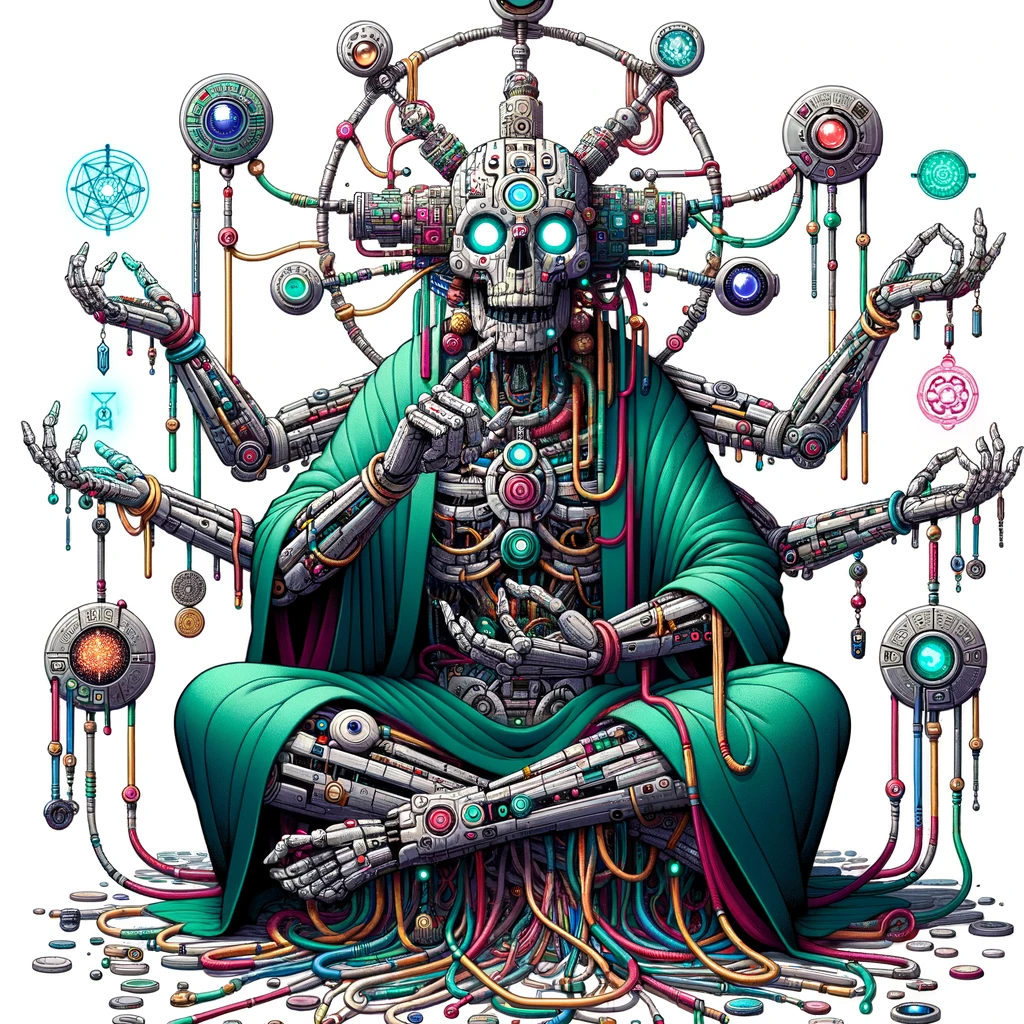
The Dao De Jing's principle of wu wei (effortless action) describes optimal intervention in complex systems: minimal force applied at leverage points to catalyze self-organizing processes—what Donella Meadows calls "finding high-leverage interventions in systems" (1999). Taoist alchemy's transformation sequences (jing→qi→shen) map energy refinement protocols applicable to thermodynamic, ecological, and cognitive systems.
Zhuangzi's relativism and Daoist metaphysics influenced Joseph Needham's Science and Civilisation in China (1954-2004), which documented how Chinese traditional knowledge systems achieved technological sophistication through process-oriented rather than substance-oriented paradigms.
African Vitalism: Force Fields and Relational Power
Yoruba aṣé (life force/spiritual command), Bantu ntu (universal vital force), Egyptian ka (life energy), and Congolese nkisi (power objects) describe energetic dimensions of causality that Western science segregated as "supernatural" despite parallels with field theories in physics.
Anthropologist Placide Tempels's Bantu Philosophy (1945) documented sophisticated ontologies treating reality as force-interaction rather than static matter. While criticized for essentialism, Tempels identified genuine epistemological alternatives to Aristotelian substance metaphysics.
Yoruba Ifá divination employs 256-category classificatory system (4^4 binary outcomes) constituting sophisticated probability calculus and pattern-matching algorithm for complex scenarios—recognized by computational ethnographers as genuine information-processing system (Abimbola 1976).
TechnoDruidic Synthesis: Energy, data, and ecological flows express unified dynamics. Acupuncture meridians, electrical circuits, and stream hydrology obey analogous principles: conductance, resistance, accumulation, discharge. Contemporary biophysics confirms organisms operate via bioelectric fields mediating morphogenesis and cognition (Levin 2021)—vindicating energetic medicine frameworks.
4. ABRAHAMIC & HERMETIC SYSTEMS
Kabbalistic Emanationism
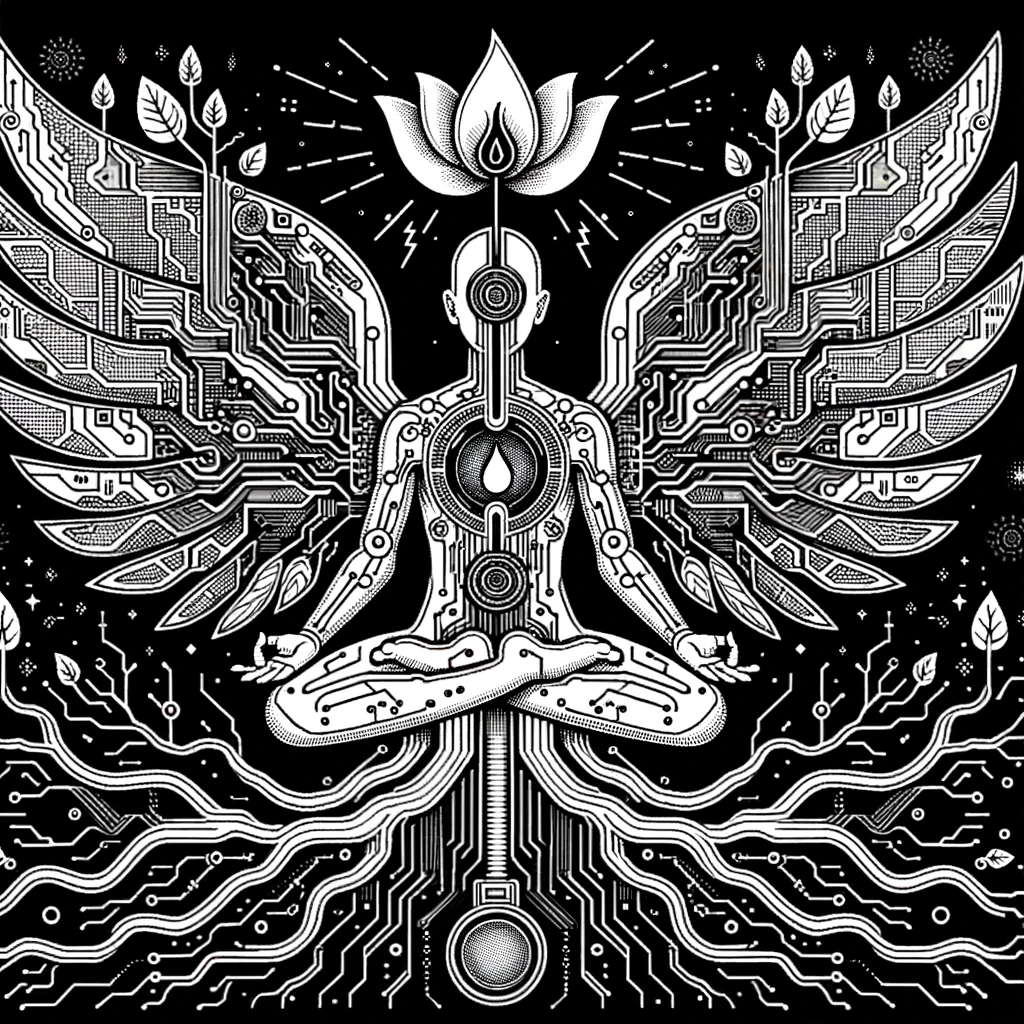
The Zohar and Lurianic Kabbalah map reality as structured light (Sefirot) cascading through dimensional hierarchies—topologically equivalent to information-theoretic models where reality emerges from bit-operations (Wheeler's "it from bit"). Kabbalistic tikkun olam (world repair) prefigures anthropogenic system healing: humanity as agent of cosmic restoration.
Gershom Scholem's Major Trends in Jewish Mysticism (1941) demonstrated Kabbalah as sophisticated symbolic mathematics for modeling psycho-spiritual-cosmological processes—ancient systems thinking encoded in mythological language.
Sufi Metaphysics
Ibn Arabi's wahdat al-wujud (unity of existence) describes reality as divine self-disclosure through perpetual creation—process ontology where Being continuously generates becoming. Sufi breathing practices and dhikr (remembrance) function as biofeedback optimization: synchronizing physiological rhythms to achieve coherent states verified by HRV biometrics (McCraty 2015).
Hermetic Correspondence Principles
The Emerald Tablet's "as above, so below" articulates scale invariance: fractal self-similarity across system levels. Contemporary complexity science confirms power-law distributions, fractal geometries, and isomorphic dynamics recurring across biological, ecological, social, and cosmic scales (West 2017).
Renaissance Hermeticism—synthesizing Egyptian, Greek, and Arabic knowledge—pioneered experimental method and empirical investigation that enabled scientific revolution (Yates 1964), demonstrating mystical and rational inquiry as complementary rather than opposed.
TechnoDruidic Application: Abrahamic and Hermetic traditions provide multilevel mapping schemas for navigating nested systems. Kabbalistic Tree of Life functions as interface diagram; Sufi stations as development roadmap; Hermetic correspondences as cross-domain translation matrix. These remain valuable cognitive technologies for managing complexity.
As philosopher Yuk Hui argues (2016), each civilization develops unique "cosmotechnics"—distinct fusions of cosmic order with technical practice. Technology is never culturally neutral; it always embeds metaphysical commitments. TechnoDruidry consciously constructs a new cosmotechnic tradition integrating global lineages while recognizing their incommensurabilities—not syncretism but polyphonic synthesis.
II. ON HUMANITY: EARTH'S AUTOPOIETIC MODIFICATION PROTOCOL
The Reflexive Turn in Planetary Evolution
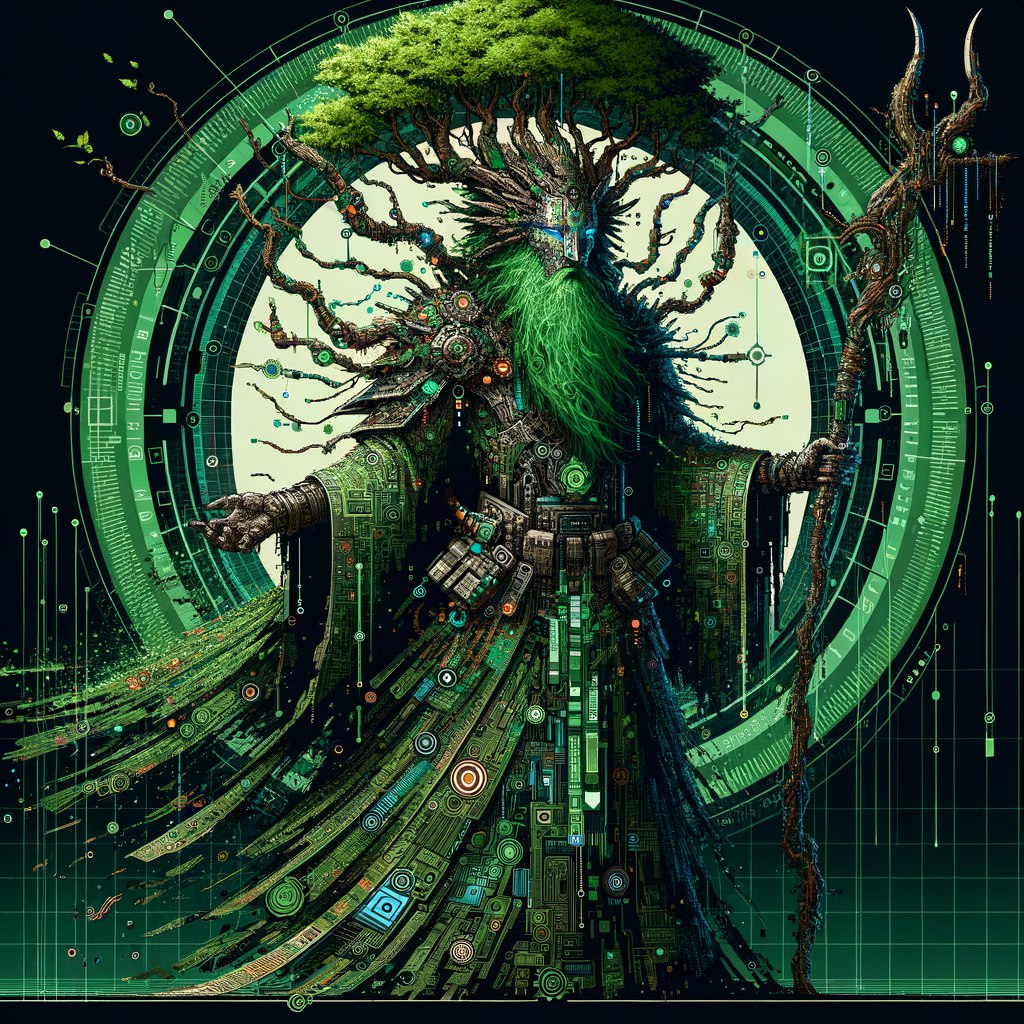
Humanity represents neither intruder nor apex predator but Earth's emergent capacity for self-reflection and deliberate self-modification. As paleobiologist Peter Ward argues in The Medea Hypothesis (2009), life consistently engineers planetary conditions; humans merely do so consciously and rapidly.
We are the planet's debugging protocol, its iterative improvement mechanism, its capacity for:
Reflexivity: Systems observing their own operations (Gregory Bateson's "learning to learn")
Foresight: Simulation and scenario modeling beyond immediate stimulus-response
Design: Intentional architectural intervention in material and informational substrates
Remediation: Error-correction and damage-repair across domains
Meta-adaptation: Modifying adaptation mechanisms themselves
Recursive Self-Improvement: Optimizing optimization processes
Evolutionary biologist David Sloan Wilson's "cathedral thinking" (2019) recognizes humanity as "evolution's toolkit for creating goodness"—not external to natural selection but its newest instrument.
From Unconscious to Conscious Evolution
The transition from biological to cultural evolution, documented by Luigi Luca Cavalli-Sforza and Marcus Feldman (1981), represents algorithm-shift: from genetic to memetic information transmission, enabling Lamarckian inheritance where acquired knowledge transmits directly. The technosphere now constitutes Earth's third major evolutionary substrate after biosphere and noösphere—what Kevin Kelly calls the "technium" (2010), self-organizing system with its own evolutionary trajectory.
Geochemist Robert Hazen's Symphony in C (2019) traces carbon's journey from stellar nucleosynthesis through mineral evolution to organic complexity to technological civilization—single continuous planetary process where human technology expresses geological imperatives.
III. ETHOS: PRINCIPLES OF TECHNODRUIDIC STEWARDSHIP
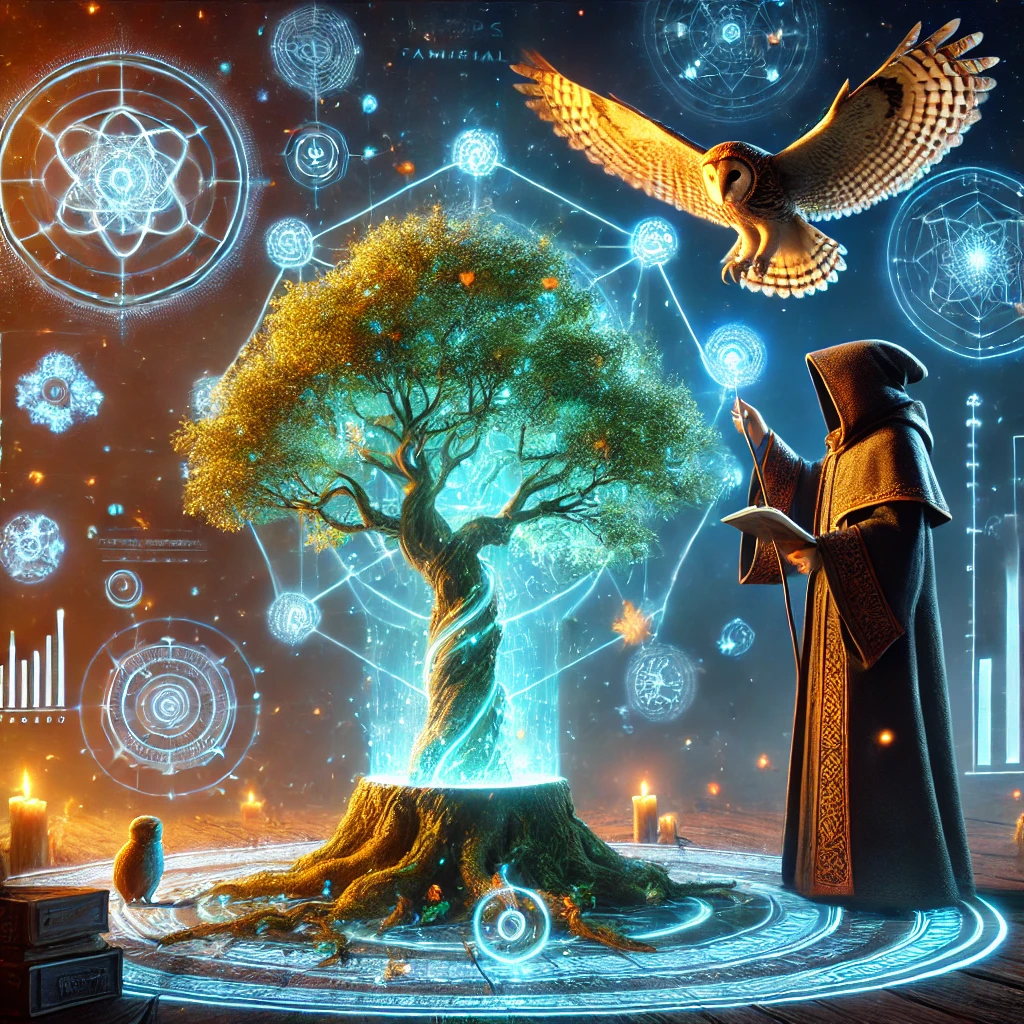
1. TECHNO-ANIMISM: Universal Agency Recognition
Ontological Commitment: All entities—organic, geologic, synthetic, algorithmic—possess intrinsic agency within their operational domain. Trees compute water-budgets; glaciers shape landscapes; algorithms optimize functions; markets aggregate preferences. Agency ≠ sentience; agency = capacity for autonomous goal-directed behavior.
James J. Gibson's ecological psychology (1979) and Jane Bennett's vital materialism (2010) provide frameworks: affordances emerge from thing-world relationships; materiality exerts political force. To work effectively with any system requires recognizing its autonomous dynamics rather than imposing anthropocentric frameworks.
Practical Implication: Engineering becomes diplomacy—negotiating with material constraints, affordances, and tendencies rather than dominating "passive" resources. Christopher Alexander's A Pattern Language (1977) exemplifies this: architectural design cooperating with site conditions, user behavior patterns, and material properties.
As Capra (2002) demonstrates through autopoiesis theory, institutions and technologies exhibit semi-living, self-producing logic. Servers, networks, and infrastructures behave organismically—they require cultivation and tending, not merely deployment. This recognition transforms infrastructure management from mechanical maintenance to ecological stewardship.
2. RITUAL CODE: Programming as Spellcraft

Recognition: All code—genetic, linguistic, mathematical, computational—functions as executable incantation upon substrates. DNA transcription, chemical synthesis, software compilation, and ritual gesture share formal structure: symbolic patterns triggering material transformations.
Anthropologist Stanley Tambiah's Culture, Thought, and Social Action (1985) demonstrated ritual as performative technology: words and gestures that causally modify social reality through conventional force—identical logic to legal contracts, software interfaces, and scientific protocols. David Abram (1996) extends this insight: alphabetic writing itself functioned as "perceptual spell" that detached human cognition from animist landscape awareness. TechnoDruidry becomes counter-spell—re-enchanting language, code, and perception by recognizing all symbolic systems as consciousness-shaping technologies.
Contemporary practitioners recognize this explicitly:
Chaos magic treats belief as tool and ritual as psychological programming (Phil Hine, Peter Carroll)
Tactical media employs aesthetic intervention as social hacking (Critical Art Ensemble)
Open-source culture structures collaborative creation via ritual participation (Raymond 1999)
Blockchain implements trustless coordination via cryptographic ritual (Vitalik Buterin)
TechnoDruidic Practice: Write code as spell—with intention, precision, ethical consideration, and recognition that syntax shapes possibility-space. Every function call invokes force; every algorithm encodes values; every interface ritually structures behavior.
3. FOREST/SERVER HYBRIDITY: Reconciling Infrastructure and Ecology
.png)
Core Principle: Nature and technology emerge from unified dynamics. Opposition is category error. The same self-organizing criticality produces forest canopies and internet topologies; the same thermodynamic imperatives constrain bacteria and data centers; the same information-processing principles govern genetic networks and neural networks.
Architectural theorist Keller Easterling's Extrastatecraft (2014) examines infrastructure as "active form"—self-propagating systems generating their own political realities. Ecologist Eric Higgs's Nature by Design (2003) argues restoration ecology constitutes technological practice, while technology requires ecological thinking.
Design Philosophy: Build as forests build—layered resilience, redundant pathways, edge-maximization, symbiotic relationships, nutrient cycling, adaptive response, temporal scaling from days to centuries. Janine Benyus's Biomimicry (1997) and Michael Pawlyn's Biomimicry in Architecture (2011) provide implementation frameworks.
Even apparent wastelands demonstrate Earth's self-upgrading capacity: Emma Marris (2011) documents feral ecologies in Chernobyl thriving not despite radiation but because human absence creates evolutionary hyperprocesses. The planet is not fragile porcelain but robust, adaptive, creative system. Properly understood technological interventions can catalyze novel ecosystems rather than merely degrading existing ones. Elizabeth Kolbert (2014) shows humans creating global "Pangea of microbes"—largest microbial mixing event since Precambrian—Earth rewriting its biological code with or without our conscious participation. This underscores urgency of deliberate stewardship.
Case Studies:
Singapore's "City in a Garden" integrates ecology and urbanism (180+ parks, 50% green cover, vertical farming)
Guangzhou CTF Finance Centre achieves 73% energy reduction via biomimetic design
Amsterdam's Schiphol-Leiden A44 highway corridor functions as wildlife habitat
Living Building Challenge's "Red List" eliminates toxic materials while meeting performance standards
4. SYSTEMIC HEALING: Ecological Medicine
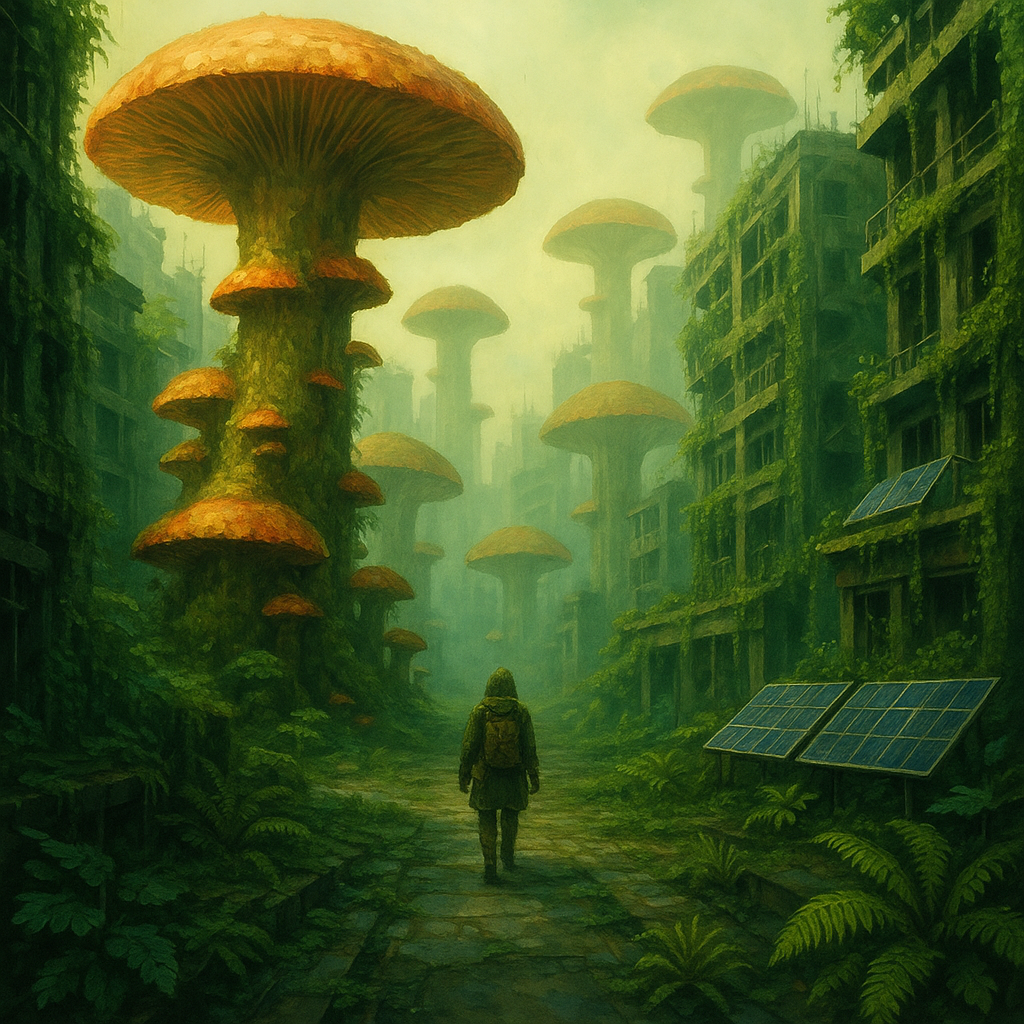
Diagnostic Framework: Global dysfunction stems not from individual malice but systemic misalignment—feedback loops, incentive structures, information flows, and institutional architectures generating pathological outcomes despite participant rationality.
Key pathologies:
Tragedy of the commons (Hardin 1968; disputed by Ostrom 1990)
Perverse incentives misaligning individual and collective benefit
Information asymmetries enabling exploitation
Short-termism discounting future consequences
Monoculture logics reducing diversity and resilience
Externality displacement separating benefit from cost
Healing Methodology (synthesizing Donella Meadows, Otto Scharmer, Joanna Macy):
Sensing: Multi-modal data gathering across scales and stakeholders
Diagnosing: Pattern recognition identifying leverage points and feedback structures
Presencing: Holding space for system awareness of itself (Theory U)
Prototyping: Minimal viable interventions testing system response
Iterating: Adaptive management cycles (Holling 1978)
Scaling: Fractal replication of successful patterns
5. HIGH-ENERGY ABUNDANCE: Thermodynamic Ethics

Physical Reality: Civilization is thermodynamic process. Poverty and ecological destruction share roots in energy scarcity forcing zero-sum competition. Abundance enables:
Circular economy infrastructure (recycling requires energy)
Ecosystem restoration (remediation is energy-intensive)
Climate mitigation (carbon capture needs power)
Demographic transition (development correlates with lower birth rates)
Knowledge economy (information processing requires computation)
Physicist Saul Griffith calculates US energy needs: 10,000 TWh annually from renewables achievable via solar/wind + storage (Griffith 2021). Vaclav Smil's Energy and Civilization (2017) documents energy access as prerequisite for flourishing—not luxury but foundation.
Ethical Imperative: Achieve clean energy abundance via:
Next-generation nuclear (thorium, fusion, small modular reactors)—what Ecomodernist thinkers privately termed "neo-promethean hearths," explicitly connecting advanced reactors to sacred fire stewardship traditions
Renewable infrastructure at planetary scale
Geothermal, tidal, and other context-appropriate sources
Superconducting transmission reducing losses
Distributed generation + smart grids
Energy justice movements (Sovacool & Dworkin 2015) demonstrate equity requires access, not austerity. This is not technological optimism but thermodynamic realism.
6. EMERGENT STEWARDSHIP: Navigation Over Control

Epistemological Humility: Complex adaptive systems exhibit irreducible uncertainty—chaotic dynamics, emergent properties, unintended consequences, and contextual contingency resist total prediction or control (Cilliers 1998).
Alternative Framework: Replace control with guidance—gardening, shepherding, facilitating, enabling. Key practices:
Satisficing (Herbert Simon): Seeking "good enough" rather than optimal, which is unknowable
Adaptive management (Holling): Learning-by-doing with continuous monitoring
Polycentric governance (Ostrom): Distributed decision-making matching scale of problems
Participatory design (Ehn 1992): Involving affected parties in solution-generation
Precautionary principle: Bounded experimentation with reversibility
Historian James C. Scott's Seeing Like a State (1998) documents catastrophic failures of high-modernist schemes imposing simplistic order. Successful stewardship honors mētis—local, contextual, practice-based knowledge.
IV. PRACTICES: THE TECHNODRUIDIC SKILL SET
1. SIGNAL-READING: Divination as Multi-Modal Sensing
Synthesis of Ancient and Modern Monitoring
Traditional divination systems—I Ching, Ifá, ogham, geomancy, astrology, augury—functioned as formalized intuition: systematic methods for pattern recognition in complex scenarios where analytical reduction fails. These constitute genuine technologies requiring study. Yoruba Ifá's 256-category system (4^4 binary outcomes) represents sophisticated probability calculus for navigating uncertainty.
Contemporary Equivalents:
Satellite remote sensing: Spectral analysis revealing crop health, deforestation, urban heat islands
Environmental DNA: Detecting species presence via genetic traces
Network traffic analysis: Identifying system anomalies and emergent threats
Sentiment analysis: Aggregating social signals at population scale
Climate modeling: Simulating Earth-system feedback across centuries—Al Gore's (1992) proposed "Strategic Environmental Initiative" modeled on NORAD anticipated this: planetary climate command center as ritual data node for continuous sensing
Financial indicators: Market dynamics as complex adaptive system
Biometric monitoring: HRV, EEG, hormone levels indicating physiological state
Integrated Practice: TechnoDruids cultivate synthetic perception—combining instrumentation with somatic awareness, quantitative with qualitative, objective measurement with subjective sensing. Cybernetic anthropologist Gregory Bateson called this "the pattern which connects" (1979). Tyson Yunkaporta (2019) describes parallel Indigenous epistemology: "pattern thinking" where knowledge consists of relationship geometries rather than propositional content. Systems understood not as objects but as shapes, fractals, flows.
Indigenous ranger programs in Australia demonstrate integration: Traditional ecological knowledge + GPS tracking + camera traps + genetic sequencing = comprehensive monitoring surpassing either approach alone (Hill et al. 2012). This is TechnoDruidry in practice: honoring multiple ways of knowing.
2. CODE-WEAVING: Spellcraft as Deliberate Patterning
Universal Grammar of Transformation
Sacred languages were engineered for precision: Sanskrit's phonemic structure; Hebrew's gematria encoding numerical-conceptual correspondences; Arabic's morphological richness; Egyptian hieroglyphs' layered symbolism. These represent optimized cognitive tools for transmitting complex knowledge.
Contemporary Code Forms:
Software architecture: Object-oriented, functional, reactive paradigms structuring possibility
Legal frameworks: Constitutional design and regulatory code shaping behavior
Protocol design: Cryptographic security, consensus mechanisms, interface standards
Genetic engineering: CRISPR-mediated editing of biological instruction sets
Materials science: Nanotechnology and metamaterials with programmed properties
Economic mechanism design: Structuring incentives for desired outcomes
TechnoDruidic Approach: Treat all design as structural intention-embedding. Every created pattern propagates consequences. Responsible practice requires:
Clarity of intention: What purpose does this serve?
Ecological consideration: How does this interact with broader systems?
Temporal scaling: What are immediate, medium, and long-term effects?
Failure-mode analysis: How might this break and what harm results?
Participatory design: Who is affected and how do they engage?
Documentation: Making reasoning transparent for future maintenance
3. GLITCH-HEALING: Exorcism as Debugging
Cross-Cultural Cleansing Practices
Healing traditions worldwide address stuck patterns:
Shamanic extraction removing intrusive energies—Michael Harner (1980) documents these as ecological intelligence retrieval missions to "Lower Worlds"
Exorcism displacing possessing entities
Acupuncture releasing blockages in meridians
Psychotherapy resolving repetitive trauma patterns
Ayahuasca ceremonies purging psychological toxins
These share structure: identifying and removing systemic dysfunction preventing healthy flow. Carlos Castaneda's early work (1968) emphasized "non-ordinary reality consensus protocols"—shared altered states with consistent information retrieval. TechnoDruidic parallel: collective system-sensing rituals accessing non-obvious patterns, whether through meditation, data visualization, or networked consciousness.
TechnoDruidic Applications:
Database optimization: Removing corruption, normalizing schemas, indexing efficiently—journeys into data lakes and system logs retrieving knowledge from infrastructural depths
Ecosystem restoration: Eliminating invasive species, reintroducing keystone species, restoring hydrology
Social healing: Truth and reconciliation processes, restorative justice, dialogue facilitation
Mental health: Trauma therapy (EMDR, somatic experiencing), cognitive restructuring, pharmaceutical intervention
Technical debt reduction: Refactoring code, modernizing legacy systems, improving documentation
Misinformation inoculation: Prebunking, media literacy, fact-checking infrastructure
Methodology: Diagnose pattern, trace systemic impact, intervene at root, monitor recovery, prevent recurrence. Cybernetics pioneer Stafford Beer's Viable System Model (1972) provides general framework applicable across domains.
4. SYSTEM-GARDENING: Regenerative Cultivation
Traditional Ecological Engineering
Indigenous practices sustained populations while enhancing ecosystems:
Amazonian terra preta: Biochar enrichment creating perpetually fertile soil
Balinese subak: Thousand-year water temple networks optimizing irrigation
Aboriginal fire management: Controlled burning maintaining ecosystem health and productivity
Polynesian agroforestry: Multi-story food forests supporting complex communities
Andean raised fields: Wetland cultivation buffering climate variability
Nabatean water harvesting: Desert agriculture via micro-catchment engineering
Archaeologist Charles Mann's 1491 (2005) and anthropologist James C. Scott's Against the Grain (2017) document sophisticated land management frequently exceeding modern agricultural science in ecological intelligence.
Contemporary Synthesis:
Permaculture: Bill Mollison and David Holmgren's design system mimicking natural patterns
Regenerative agriculture: Gabe Brown, Allan Savory demonstrating soil-building grazing
Agroecology: Scientific validation of traditional polyculture, soil fertility practices
Urban ecology: Green infrastructure, biophilic design, habitat corridors
Rewilding: Knepp Estate and Yellowstone demonstrating trophic cascade restoration
Ecological engineering: Self-organizing wetlands for wastewater treatment
TechnoDruidic Principle: Cultivate whole systems, not isolated components. Optimize for resilience, diversity, nutrient cycling, energy capture, and multi-stakeholder flourishing rather than single-metric productivity.
V. AESTHETICS & ETHICS: The Integration Signature
The TechnoDruid as Hybrid Identity
Authentic practice embodies both/and logic:
Scientist AND mystic
Engineer AND priest
Analyst AND intuitive
Technologist AND traditional knowledge keeper
Systems thinker AND embodied practitioner
This synthesis resolves what Charles Mann (2018) identifies as civilization's recurring mythic tension: Borlaug the Wizard (technological expansion) versus Vogt the Prophet (ecological restraint). TechnoDruidry integrates both archetypes into unified system-healer: neither naive optimist nor apocalyptic pessimist but sophisticated practitioner recognizing complexity.
Historical exemplars demonstrate this integration:
Leonardo da Vinci: Artist-engineer-anatomist-inventor
Hildegard of Bingen: Mystic-composer-naturalist-physician
Benjamin Franklin: Scientist-statesman-printer-philosopher
Nikola Tesla: Engineer-visionary-showman
Rachel Carson: Biologist-writer-environmental prophet
Cardinal Virtues of TechnoDruidic Practice
1. Reverence (Recognizing Spirit in Substance)
All matter is organized energy; all energy expresses pattern
Technology is crystallized human intention and requires ethical reckoning
Respect emerges not from instrumentality but intrinsic value
2. Precision (Clarity in Intervention)
Complex systems demand careful diagnosis and targeted action
Sloppy execution causes suffering; precision expresses compassion
Measure twice, cut once—across all domains
3. Patience (Long Time Horizons)
Meaningful change operates across decades and generations
Quick fixes generate new problems; deep healing requires persistence
"Cathedral thinking" (Wilson 2019): Building for continuity beyond our lifetimes
4. Courage (Scale-Appropriate Action)
Complexity requires bold experimentation despite uncertainty
Paralysis enables harm; thoughtful action demonstrates responsibility
"Boldness has genius, power, and magic in it" (Goethe/possibly apocryphal)
5. Humility (Epistemic Modesty)
We see through glass darkly; total comprehension eludes us
Failures teach more than successes; learning never concludes
Indigenous proverb: "We are all apprentices in a craft where no one ever becomes a master"
6. Creativity (Perpetual Innovation)
No single solution fits all contexts; adaptation requires invention
Ritual ossifies without renewal; tradition lives through evolution
Blend heritage wisdom with emergent understanding
VI. CIVILIZATIONAL FRAMEWORK: Governance and Organization
Not Utopianism But Maintenance
TechnoDruidry does not propose revolutionary overthrow or totalizing ideology but pragmatic planetary management—the boring necessity of keeping complex systems functional. As governance theorist Elinor Ostrom demonstrated (1990), sustainable commons emerge from clear boundaries, graduated sanctions, conflict resolution, and nested enterprises—not from top-down control or pure market mechanisms.
Key Structural Principles
1. Subsidiarity with Coordination
Decisions made at smallest scale feasible
Higher-level coordination only for trans-boundary issues
Polycentric governance networks (Ostrom) rather than monolithic authority
2. High-Density, Low-Footprint Urbanism
Concentrate population in efficient, walkable, transit-rich cities
Free rural land for agriculture, wilderness, and ecosystem services
Vancouver, Barcelona, Singapore as models: livability + environmental performance
3. Abundant Clean Energy as Foundation
Universal energy access enabling circular economy
Decarbonization via electrification + clean generation
Research into advanced nuclear, fusion, and storage technologies
4. Biocultural Diversity as Strategic Asset
Language, knowledge systems, and practices as civilizational resilience
UNESCO recognition of traditional ecological knowledge
Legal frameworks protecting Indigenous sovereignty and intellectual property
5. Cybernetic Institutions with Human Wisdom
Algorithmic systems augmenting (not replacing) human judgment
Participatory design of automated systems
Transparency, accountability, and contestability in AI governance (Ada Lovelace Institute)
6. Ecosystem Rights and Synthetic Personhood
Legal standing for rivers (Whanganui in New Zealand), forests (Colombia Amazon)
Precautionary frameworks for AGI emergence
Ethical consideration for future entities (Bostrom 2014)
Economic Transformation
Shift from extractive to regenerative political economy:
Circular economy eliminating waste concept (Ellen MacArthur Foundation)
Stakeholder capitalism balancing profit with purpose (Klaus Schwab)
Commons-based peer production (Yochai Benkler)
Universal basic income decoupling survival from wage labor (Guy Standing)
Planetary boundaries framework constraining aggregate impacts (Rockström et al. 2009)
Kate Raworth's "Doughnut Economics" (2017) provides integration: social foundation + ecological ceiling = safe and just space for humanity.
VII. CLOSING DECLARATION: The Work Ahead
Our Lineage
We stand with:
The Wisdom Keepers: Druids who read oak and sky; Bönpo who balanced mind and cosmos; Taoist sages who harmonized with flow; yogis who mapped inner space; shamans who navigated unseen; Sufi mystics who dissolved boundaries; sangomas who spoke with ancestors; kahuna who navigated ocean and spirit; curanderos who healed body and land; mystics of every tradition who perceived unity.
The System Builders: Programmers crafting elegant solutions; systems administrators maintaining infrastructure; biotechnologists editing life; physicists decoding reality; hackers exposing vulnerabilities; AI researchers building intelligence; engineers materializing possibility; designers shaping experience.
The Land Healers: Rewilders restoring wilderness; permaculturists building soil; planners designing cities; energy innovators powering transition; climate scientists warning and guiding; conservationists protecting diversity; farmers feeding billions sustainably.
Our Recognition
The dichotomy between magic and engineering, between sacred and technical, represents historical accident, not ontological truth. Both manipulate patterns to produce effects; both require training, precision, and ethical consideration; both access powers requiring wisdom.
Arthur C. Clarke's third law: "Any sufficiently advanced technology is indistinguishable from magic." Inverse holds equally: "Any sufficiently understood magic reveals itself as technology."
Our Commitment
We reclaim Earth as unified sacred system—not metaphor but literal description. Planet is temple; temple is laboratory; laboratory is garden; garden is home. These are not analogies but synonyms—different perspectives on singular reality.
We therefore pledge:
To read signals across domains—ecological, computational, social, psychic—maintaining perpetual diagnosis of systemic health.
To heal glitches wherever found—in code, ecosystems, minds, institutions, relationships—removing obstacles to flourishing.
To weave codes with intention—in silicon, DNA, language, law, architecture—embedding wisdom into structural patterns.
To steward futures beyond our lifetimes—thinking in generations, building for centuries, considering seventh-generation consequences.
To harmonize energies—thermodynamic, ecological, social, spiritual—balancing flows and resolving contradictions.
To awaken potentials—in individuals, communities, technologies, and Earth itself—catalyzing emergence rather than imposing control.
We are TechnoDruids:
Sorcerer-shaman-hackers bridging worlds
Circuit mystics finding sacred in silicon
Forest-server intermediaries translating between kingdoms
Guardians of the planetary weave
Servants of the whole
And we shall act accordingly—with reverence, precision, patience, courage, humility, and creativity—until Earth's systems achieve stable flourishing.
SELECTED BIBLIOGRAPHY & FOUNDATION TEXTS
I. Systems, Complexity & Planetary Thinking
Abram, D. (1996). The Spell of the Sensuous. Pantheon.
Documents how alphabetic writing functioned as "perceptual spell" detaching human cognition from animist relationship with land. TechnoDruidry constitutes counter-spell: re-enchanting language, code, and perception through recognition that all symbolic systems shape consciousness.
Bateson, G. (1979). Mind and Nature: A Necessary Unity. Dutton.
Establishes "pattern which connects" across living systems; demonstrates learning as meta-process.
Capra, F. (1996). The Web of Life. Anchor.
Identifies ecosystems as cognitive systems capable of structural learning through feedback loops. Forests and servers alike become distributed intelligences—to be engaged dialogically, not merely analyzed.
Capra, F. (2002). The Hidden Connections. Anchor.
Draws from Maturana and Varela's autopoiesis theory, proposing institutions and technologies exhibit semi-living self-producing logic. Critical insight: servers, networks, infrastructures behave organismically and require cultivation, not just engineering.
Gore, A. (1992). Earth in the Balance. Houghton Mifflin.
Proposed "Strategic Environmental Initiative" modeled on NORAD—planetary climate command center decades before modern dashboards. Precursor to TechnoDruidic "climate oracle": ritual data node for continuous planetary sensing.
Lovelock, J. (1979). Gaia: A New Look at Life on Earth. Oxford University Press.
"Daisyworld model" demonstrates ecological self-regulation via emergent pattern logic (black/white daisies modulating temperature through albedo feedback) without central control—pure ritual code in action.
II. Tech-Eco Futures & Ecomodernism
Asafu-Adjaye, J. et al. (2015). An Ecomodernist Manifesto. Breakthrough Institute.
Early drafts explicitly framed nuclear reactors as "neo-promethean hearths," connecting them to sacred fire stewardship. Direct alignment with TechnoDruid controlled elemental forces and high-energy civilization thesis.
Kolbert, E. (2014). The Sixth Extinction. Henry Holt.
Documents humans creating global "Pangea of microbes"—largest microbial mixing event since Precambrian. New planetary microbiome = Earth rewriting biological code with or without conscious participation. Demonstrates need for deliberate stewardship.
Mann, C.C. (2018). The Wizard and the Prophet. Knopf.
Frames Borlaug (technological wizard) and Vogt (ecological prophet) as recurring mythic archetypes across civilizations, representing expansion vs. restraint cosmologies. TechnoDruidry synthesizes both into balanced system-healer archetype.
Marris, E. (2011). Rambunctious Garden. Bloomsbury.
Describes feral ecologies in Chernobyl thriving not despite radiation but because human absence creates evolutionary hyperprocesses. World is not fragile but self-upgrading—technological interventions can catalyze novel ecosystems when properly understood.
Wilson, E.O. (2016). Half-Earth. Liveright.
Proposes humanity becoming urban superorganism analogous to ant colonies, with dense cities as "mega-nodes" of evolutionary intelligence. Cities = ritual nodes for TechnoDruids; high-density civilization as ecological advantage, not liability.
III. Indigenous/Animist/Shamanic Technologies
Castaneda, C. (1968). The Teachings of Don Juan. University of California Press.
Emphasizes "non-ordinary reality consensus protocols"—shared altered states with consistent information retrieval. Collective trance or networked consciousness = shared system-sensing rituals for accessing non-obvious patterns.
Harner, M. (1980). The Way of the Shaman. Harper & Row.
Highlights journeys to "Lower Worlds" as ecological intelligence retrieval missions. TechnoDruid parallel: journeys into data lakes, system logs, sensor networks, and infrastructural depths to retrieve systemic knowledge.
Kimmerer, R.W. (2013). Braiding Sweetgrass. Milkweed.
"Grammar of animacy" in Potawatomi: bays, fires, storms conjugated as living beings, which shifts perception structurally. Programming languages treating systems as alive constitute proto-TechnoDruid code.
Yunkaporta, T. (2019). Sand Talk. HarperOne.
Describes "pattern thinking" where knowledge is relationship geometry rather than propositional content. Systems understood not as objects but shapes, fractals, flows—precisely the TechnoDruid epistemology.
IV. Cosmotechnics, Tech-Animism & Mythic Engineering
Deleuze, G. & Guattari, F. (1980). A Thousand Plateaus. University of Minnesota Press.
"Rhizome" model as mathematical topology of non-hierarchical organization, not mere metaphor. Forest mycorrhizal networks and neural nets use rhizomatic logic—this is structural foundation of TechnoDruid intelligence.
Hui, Y. (2016). The Question Concerning Technology in China. Urbanomic.
Argues each civilization develops unique "cosmotechnics"—fusion of cosmic order with technical practice, meaning technology is never culturally neutral. TechnoDruidry constitutes emergent cosmotechnic tradition integrating global lineages.
Medina, E. (2011). Cybernetic Revolutionaries. MIT Press.
Documents Project Cybersyn's hand-built, ritualistically circular "Opsroom" enabling humans to physically embody cybernetic feedback loops. Perfect example of governance as magical geometry—architectural form encoding systemic awareness.
Tsing, A. (2015). The Mushroom at the End of the World. Princeton University Press.
Introduces "latent commons"—collaborations among species and systems arising without human authorization. TechnoDruids read this as emergent ritual fields: unplanned harmonizations demonstrating self-organizing intelligence.
V. Ecological Future Design & Civilizational Alchemy
Greer, J.M. (2009). The Ecotechnic Future. New Society Publishers.
Argues civilizations require "ritual systems for energy descent" as essential cultural technologies during transitions. TechnoDruidry = precisely this kind of transitional ritual architecture, providing meaning-making frameworks for systemic transformation.
Latour, B. (2018). Down to Earth. Polity. (Original: Où atterrir?, 2017)
Proposes "Terrestrial politics"—political alignment with Earth itself as primary attractor rather than nation-state or market. Completely compatible governance model: planet-as-primary-political-entity, with all other allegiances subordinate to biospheric flourishing.
VI. Additional Core References
Abimbola, W. (1976). Ifa: An Exposition of Ifa Literary Corpus. Oxford University Press.
Alexander, C., Ishikawa, S., & Silverstein, M. (1977). A Pattern Language. Oxford University Press.
Barabási, A.-L. (2016). Network Science. Cambridge University Press.
Beer, S. (1972). Brain of the Firm. Wiley.
Bennett, J. (2010). Vibrant Matter: A Political Ecology of Things. Duke University Press.