How TTRPGS might work
I'd always been intrigued by the colorful posters and peculiar dice displayed in the window of "The Well of Dice," our local game store. One rainy Saturday afternoon, I decided to step inside and explore.
As I entered, the sweet aroma of freshly brewed coffee mingled with the musty scent of well-loved books. The walls were lined with shelves full of rulebooks, miniature figures, and boxes of all shapes and sizes. Dragons, spaceships, cyberpunk cars.
"Welcome!" called out a friendly voice as the door closed, chiming the bell on the door frame. I turned to see a smiling man with a well-trimmed beard and glasses. "I'm Gordon. Is this your first time here?"
I nodded, a bit overwhelmed. "I've always been interested in those game nights I see happening in here during the week, but I’m not really sure where to start."
Gordon's eyes lit up. "Ah, you're interested in tabletop role-playing games! Let me give you a quick tour of what we have around."
He led me to a table where a group of friends were laughing and rolling dice. "This," Gordon explained, "is the heart of tabletop role-playing games. It's all about storytelling and imagination. One person, called the Game Master or GM, creates a world and a story. The other players create characters who live in that world and influence the story through their actions."
I watched as one player described how her character was trying to sneak past a guard. The GM asked her to roll a die.
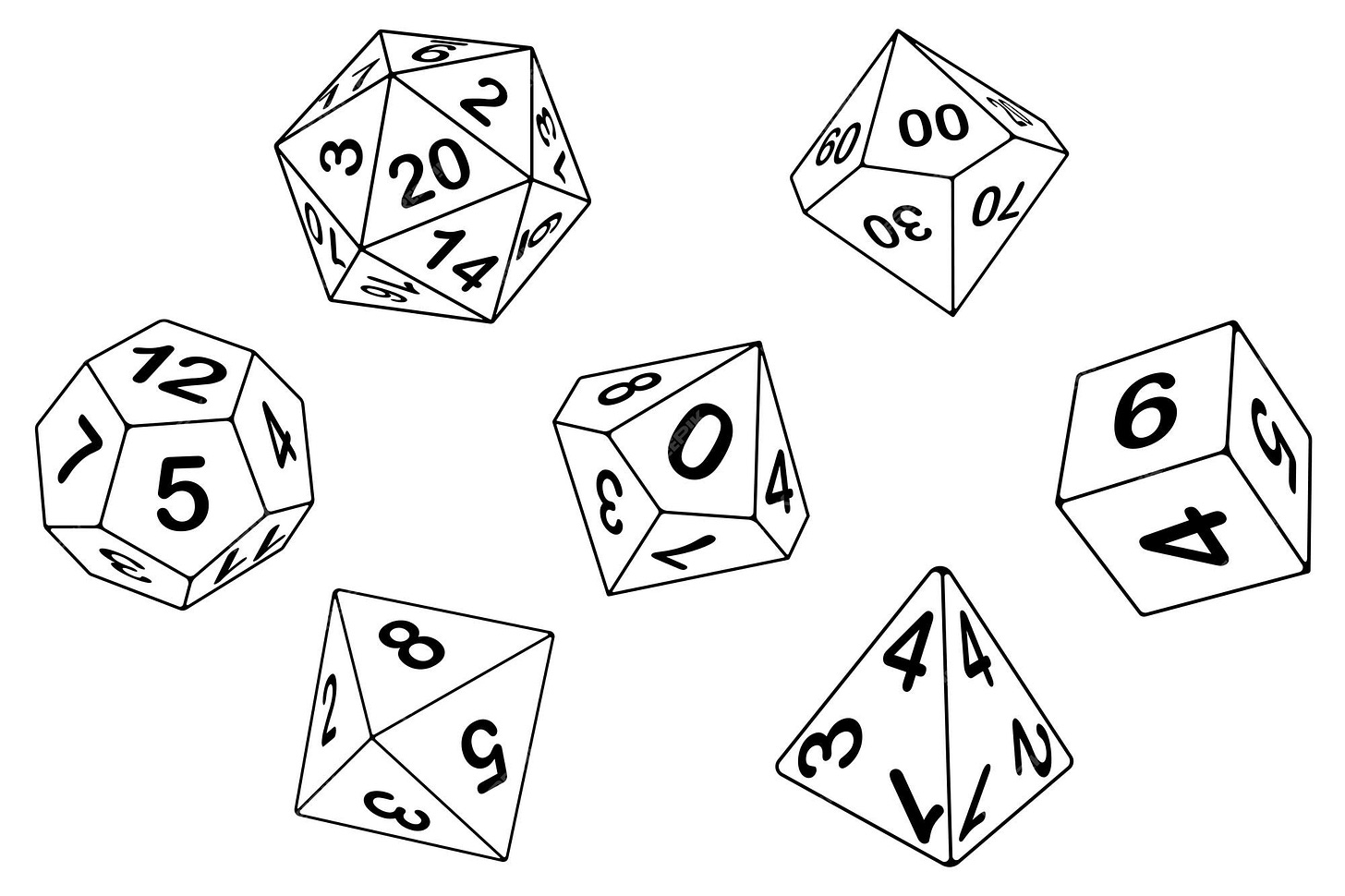
"Different games use different types of dice," Gordon continued. "See that 20-sided die they're using? That's for a d20 system, like Dungeons & Dragons. It's great for epic fantasy adventures with lots of different skills and abilities."
Gordon leaned in and whispered, "Watch this." He turned to the group and asked, "Mind if we observe for a moment?" The players nodded, and Gordon explained to me, "In this system, you typically need to roll higher than a certain number to succeed. The harder the task, the higher the number."
I watched as a player announced, "I want to climb the castle wall!"
The GM nodded and said, "That's pretty difficult. Roll a d20 and add your Athletics bonus. You'll need to beat a 15 to make it."
The player rolled, and everyone leaned in to see the result. "18!" she exclaimed. "Plus my +3 Athletics, that's 21!"
"Nice!" the GM replied. "You skillfully scale the wall, finding handholds where others would see only smooth stone."
We moved to another table where a group was huddled around a map of a futuristic city. These players were using regular six-sided dice.
"This is a d6 system," Gordon explained. "It's often used in faster-paced games. See how quickly they're rolling and resolving actions? It's perfect for high-octane sci-fi or action games."
A player at this table declared, "I'm going to break through the defenses of the mainframe!"
The GM nodded and said, "Roll 5 dice. Each 5 or 6 is a success. You need 3 successes to break through the firewall."
The player rolled and counted quickly. "Two 5s and a 6! Just made it!"
"Your fingers fly over the keyboard," the GM narrated, "and just as alarms begin to blare, you slip past the last layer of security."
Finally, we approached a dimly lit corner where a group was speaking in hushed tones. They were using 10-sided dice.
"And here we have a d10 system," Gordon whispered. "These games often focus more on storytelling and character development. They're great for moody, atmospheric games like gothic drama or political intrigue."
A player at this table murmured, "I want to sense if the duchess is lying to us."
The GM nodded and replied, "Roll your Empathy trait. You have 3 dice in that. Each 7 or higher is a success."
The player rolled three 10-sided dice. "One success," they reported.
The GM nodded. "You sense some tension in the duchess's voice, but you can't be sure if she's outright lying or just nervous."
My head was spinning with possibilities. "This is amazing!" I exclaimed. "But, how do I know which game is right for me?"
Gordon smiled. "That's the beauty of it - there's no wrong choice. Each system offers a different experience. Why don't you join our beginner's night next week? It’s a d20 based game and it should be easy to get the hang of. You can try out different games and see what feels right for you along the way."
As I left the shop with a colorful set of dice (my own d4, d6, d8, d10, d12, & d20) in my pocket (they were grey with gold flecks) and a flyer for the Game Night, I felt a thrill of excitement.
A whole new world of adventure was waiting for me, limited only by my imagination and the roll of a shape.